What to Wear on Your First Gym Session After a Long Break
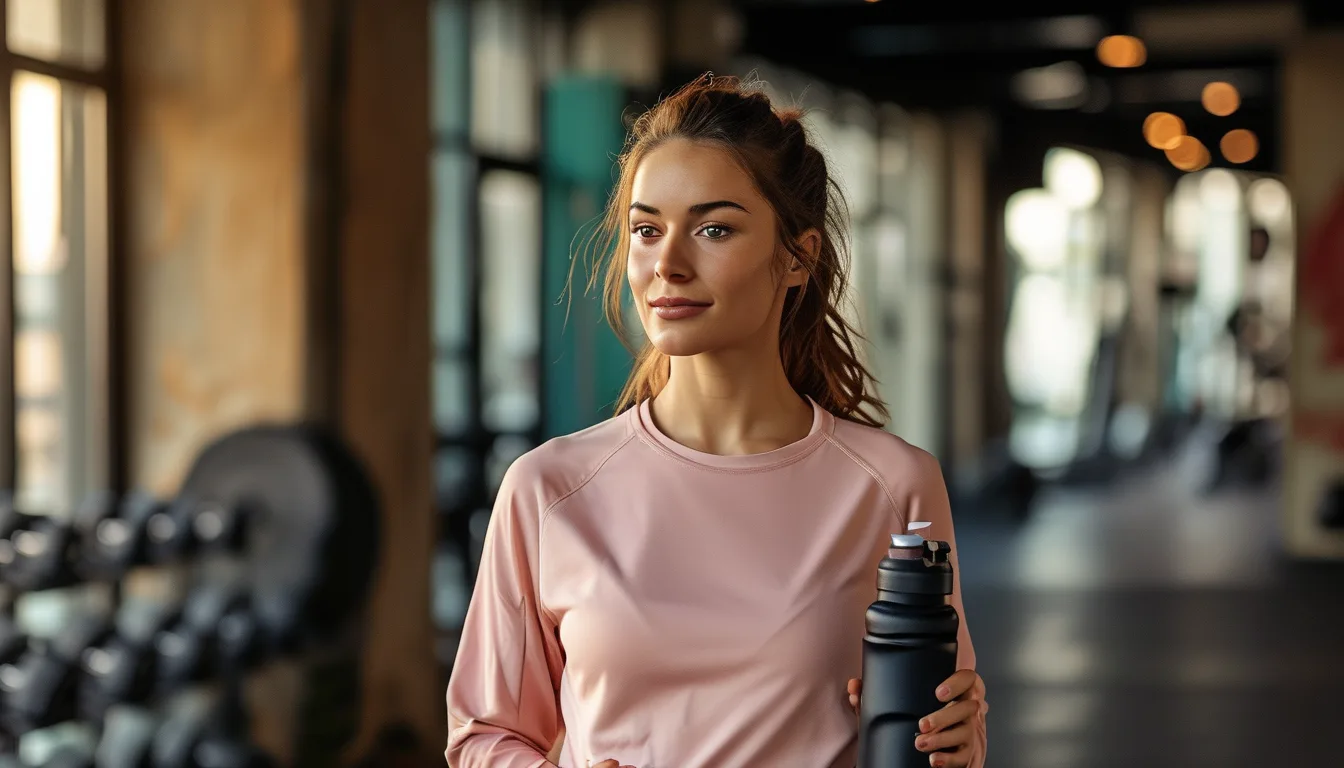
Quick Answer: Returning after a long break is not the same as starting fresh - you already own kit, and the problem is that it was bought for a different body, a different season, and possibly a different type of training. Wear something you have worn recently and know is comfortable, not the piece you associate with your fittest period. The three that matter: a top you do not have to think about when you bend over, bottoms with a waistband that stays put through hinging, and shoes that have not been in a cupboard for two years. Everything else can wait until you have been three times.
Starting from nothing is a clear problem with a clear shopping list. Coming back after a year or two is messier, because you already have a drawer full of gym clothes and every single one of them is a small referendum on the version of you who bought it.
The practical answer is smaller than it feels. Three items need to be right on the first session, and the rest can be sorted once you have proved to yourself that you are going.
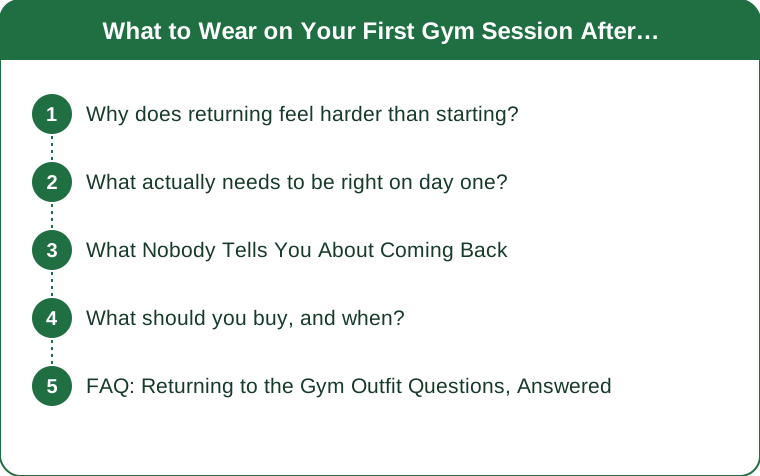
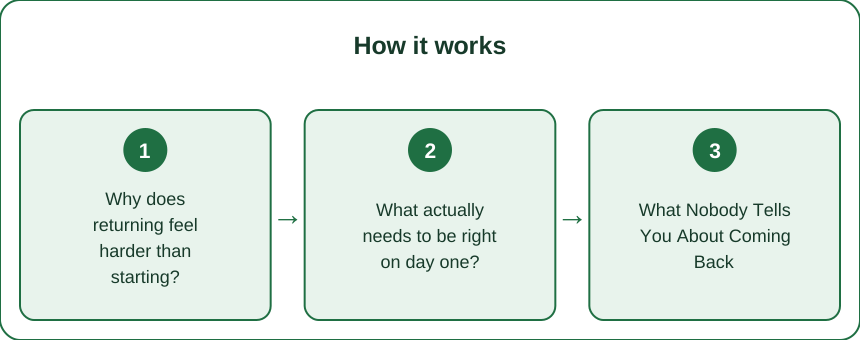
Why does returning feel harder than starting?
Because the kit carries information, and starting from scratch does not.
A drawer of old gym clothes is a set of reference points. That top was from the year you trained four times a week. Those leggings fit differently now. The shoes still have a race number cable-tied to them.
Starting fresh has none of that. Returning means every garment is a comparison, and comparison at the exact moment you need momentum is unhelpful.
There are practical differences too:
Your body has changed, and old kit fits differently. This is normal and universal - bodies change over years for a dozen reasons. Wearing something that used to fit and now does not is a genuinely bad way to start a session.
Materials degrade even unworn. Elastane breaks down over time regardless of use. Leggings that have sat in a drawer for three years may have lost recovery, gone slightly sheer, or perished at the waistband. This is not about you; it is about chemistry.
Shoes are the real problem. Midsole foam degrades with age whether or not you wear them. A pair that has sat unused for two years is meaningfully less supportive than it was, even if the tread looks perfect.
And the type of training may have changed. If you left as a runner and are returning to lift, the shoes and the fit priorities are different.
The useful reframe: you are not returning to your old training, you are starting new training. That makes the old kit optional rather than a benchmark.
What actually needs to be right on day one?
Three things. The rest genuinely does not matter yet.
1. A top you do not have to think about. The single most useful property is that it stays where it is when you bend forward, reach overhead, or lie down on a bench. A top you have to adjust is a top that occupies attention you would rather spend on the session.
This usually means a mid-length top rather than a crop, in a fabric that is not clingy, that you have worn recently and know behaves.
2. Bottoms with a waistband that stays put. The most common first-session complaint is a waistband that rolls or slides during hinging movements. A high-rise with a wide waistband is the most reliable, and if the elastic has gone in a favourite old pair, that is the one item worth replacing before you go.
Check for sheerness in daylight, especially on older leggings. Do the squat test at home, in natural light, rather than discovering it in a mirrored room.
3. Shoes that are actually current. This is the item most worth spending on and the one most people skip. A flat, stable shoe is right for most gym work; a cushioned running shoe is right for the treadmill. If your old pair has been dormant for years, the foam is compressed and it is not doing what it looks like it is doing.
And what does not matter on day one: matching, brand, colour, having the right jacket, a proper gym bag, whether the top is fitted. You will be there for forty minutes and nobody is looking. These become worth thinking about once attendance is established, not before.

What Nobody Tells You About Coming Back
Wear something you have worn in the last month. Not the piece you associate with your fittest period. Familiar clothes are one fewer unknown on a day that already has several, and the psychological weight of the old kit is real.
The gym is colder than you remember. Most gyms run cool, and if you left in spring and are returning in autumn, the difference is significant. Take a layer for the first ten minutes - the warm-up is when you are coldest and when you are least sure what you are doing, and being cold makes both worse.
Your old kit may be from a warmer season. People often stop training in one season and return in another. Summer kit in a September gym at 7am is a genuine miscalculation, and it is one of the more common reasons a first session back feels miserable.
Pockets matter more than they used to. Phone-based tracking, reading a programme off a screen, and headphones all mean the pocket situation is a real consideration in a way it may not have been when you last trained.
Nobody is tracking your return. The specific fear on a return - that people will notice you have been gone, or notice you lifting less than before - assumes a level of attention from strangers that does not exist. Gyms have very high turnover and most people there now were not there when you left.
And the thing that surprises returners most: the first session is not the hard one. The first session runs on decision-momentum and feels good. Session three is where it gets decided, when the novelty has gone and the soreness from sessions one and two has arrived. Plan for that one now.
What should you buy, and when?
Nothing before the first session, one thing after the third, properly after a month.
Before session one: buy nothing. Buying new kit before going is the most common form of productive procrastination in fitness. Wear what you have, go, and find out what actually bothers you.
The single exception is shoes, if your only pair is genuinely degraded or wrong for what you are doing. That is a safety and comfort issue rather than a wardrobe one.
After session three: buy the one thing that annoyed you. By this point you know whether it was the waistband, the top riding up, or the fact that you have nothing that dries fast enough to wear twice a week. Buy that one thing, not an outfit.
After a month: build a rotation. Three sets is the practical number for two or three sessions a week - it survives a laundry cycle without pressure. This is the point where it is worth spending properly, because you now know what you actually train in.
What to prioritise when you do spend, in order: shoes appropriate to the training, two pairs of well-fitting bottoms with good waistbands, a supportive bra that fits your current body, then tops. Tops are the most forgiving item and the one people buy first.
And a note on sizing: buy for the body you have today. A garment bought aspirationally is a garment that sits in a drawer being a reminder, which is the exact dynamic that made the old kit difficult in the first place.
FAQ: Returning to the Gym Outfit Questions, Answered
Should I replace all my old gym clothes?
No - check them rather than replacing them. Hold leggings up to daylight and do a squat test for sheerness, check waistbands for stretched-out elastic, and check whether tops still sit where you want them. Most kit is fine; typically one or two items have degraded and those are worth replacing. Shoes are the exception, since midsole foam ages whether or not it is worn.
Do I need different clothes for weights than for cardio?
The main difference is shoes. Weights favour a flat, stable sole; running favours cushioning. Clothing overlaps almost entirely, though weights involve more time on benches and floors, so a top that stays put when you lie down matters more, and shorts with a longer inseam are more comfortable on equipment.
What if nothing I own fits anymore?
Buy two things - one pair of bottoms and one top - in your current size, and go. Do not buy a full wardrobe before your first session, and do not buy a size you are hoping to be. Two well-fitting items you feel comfortable in will get you through the first two weeks, and by then you will know what you actually want.
TL;DR:
- Returning is harder than starting because old kit is a set of comparisons - and it was bought for a different body, season, and type of training.
- Only three things matter on day one: a top that stays put, a waistband that does not roll, and shoes that are not degraded.
- Elastane and midsole foam both break down with age, not use. Check old leggings in daylight and replace long-dormant shoes.
- Wear something familiar from the last month, and take a layer - the gym is colder than you remember.
- Buy nothing before session one. Buy the one thing that annoyed you after session three.
Session one runs on momentum. Plan for session three - that is the one that decides it.
See It in Motion
Seen here: Super High Waist Embossed Yoga Leggings with Inner Pocket — shop it on bubblelime.com
Keep Reading
This article is for general informational and styling purposes only. Fit, sizing, and product availability may vary.