What to Wear When You Move From Class-Based Workouts to the Gym Floor

Quick Answer: Moving from classes to the gym floor changes four things about what works: you need more coverage that stays put during floor work, more waistband security under load, footwear with a flat stable sole instead of a cushioned one, and pockets - because nobody hands you a spot to leave your phone. Class kit is designed to be seen from the front while moving continuously; floor kit is designed to stay in place while you bend, hinge, and sit on equipment.
You have a drawer full of things that worked perfectly in reformer and spin, and the first time you deadlift in them, everything about the outfit is suddenly a decision you have to think about.
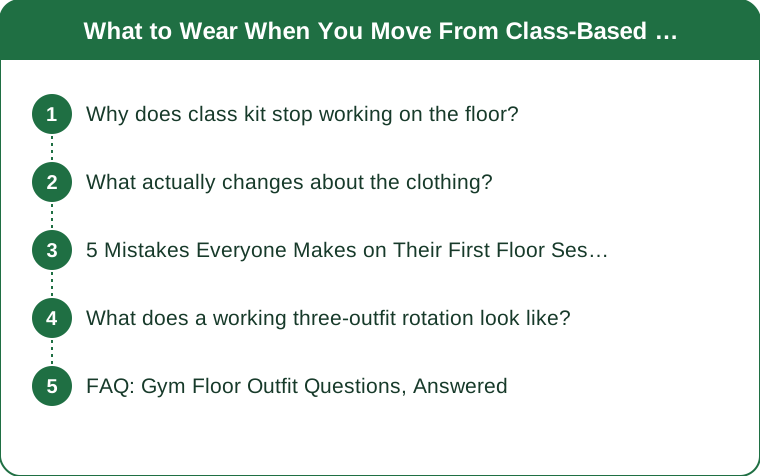
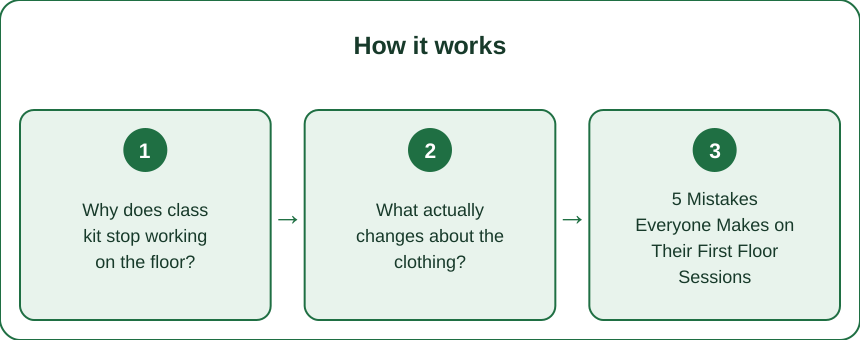
Why does class kit stop working on the floor?
Because the movements are different in ways that are not obvious until you are doing them.
Classes move continuously; floor work has long static positions. In spin or barre, you are rarely still. On the floor you set up, hold, hinge, and rest between sets - and clothing that shifts during a movement has time to shift and stay shifted.
You bend deeper and hold longer. A hinge at the hips with a loaded bar puts far more stretch through a waistband than anything in a standard class. A waistband that rolled slightly in class will roll fully here.
You sit on and lie on equipment. Benches, pads, and floor mats mean your back and hips make contact with surfaces regularly - which makes top length and coverage a practical question rather than a stylistic one.
The room is usually colder. Weight floors are typically kept cooler than studio rooms, and you spend a meaningful share of the session not moving. The temperature you dress for is your rest, not your set.
And mirrors are everywhere. Not a functional issue, but a real one for how comfortable you feel - and comfort affects whether you go back.
What actually changes about the clothing?
Four specific adjustments, roughly in order of how much difference they make.
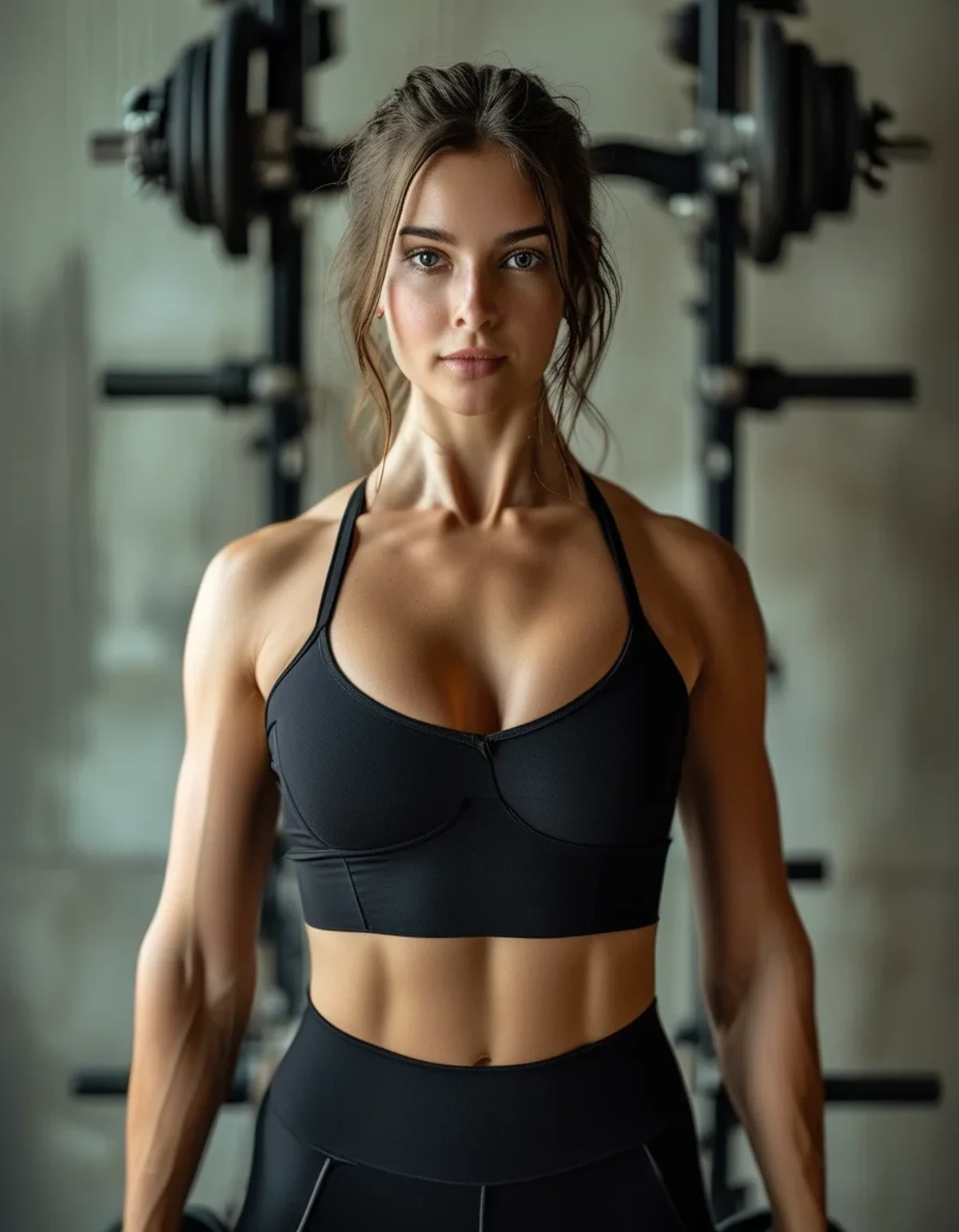
Waistband: high-rise, wide, and firm. A 4-inch or wider high-rise waistband with real compression stays put through hinging and squatting. Fold-over waistbands, drawstring-only shorts, and anything mid-rise will migrate.
Top: long enough to cover through a full hinge. Test it standing in front of a mirror and bending forward at the hips. If the top rides up past your waistband at the bottom of that motion, it will do so in every set. Fitted beats loose here - loose tops fall over your face in any lying or inverted position.
Leggings: full-length and squat-proof, in a mid to heavy weight. Lightweight leggings that were ideal for hot yoga become sheer under stretch and cold during rest. Do the bend test in changing-room light before buying.
Shoes: flat and stable rather than cushioned. This is the biggest functional change and the one most people miss. A soft running shoe compresses unevenly under load, which is the equivalent of lifting on a mattress. A flat-soled trainer, a lifting shoe, or even bare feet where permitted gives you a stable base.
Pockets: a genuine requirement. Phones for timers and programs, plus keys and a card. Side-pocket leggings solve this and are worth prioritizing over almost any other feature.
5 Mistakes Everyone Makes on Their First Floor Sessions
Mistake 1: Wearing running shoes to lift. They are built to compress and return energy, which is the opposite of what you want under a squat. You will feel more stable in flat shoes within one session - it is the single fastest improvement available.
Mistake 2: Choosing a loose top for coverage. Loose fabric catches on benches, slides toward your face during any lying press, and obscures your view of the bar path. A fitted top that is long enough is the actual answer.
Mistake 3: Dressing for the workout instead of the rests. You spend a large share of a floor session standing still between sets. A light long-sleeve or zip layer you can remove for working sets solves this and is what regulars wear.
Mistake 4: Skipping the bend test. Leggings that are opaque standing can be sheer at full stretch, and you will not find out until you are in a squat with a mirror behind you. Ten seconds in the changing room prevents it. The third mistake here is the one experienced lifters notice first, and this one is the one you will notice.
Mistake 5: Assuming everyone is looking. They are looking at their own set, or their phone. The regulars near the racks are the least likely people in the building to be evaluating your outfit - and the sooner that lands, the sooner the gym floor stops being an event.
What does a working three-outfit rotation look like?
Enough to train three or four times a week without doing laundry constantly, built from pieces that all work together.
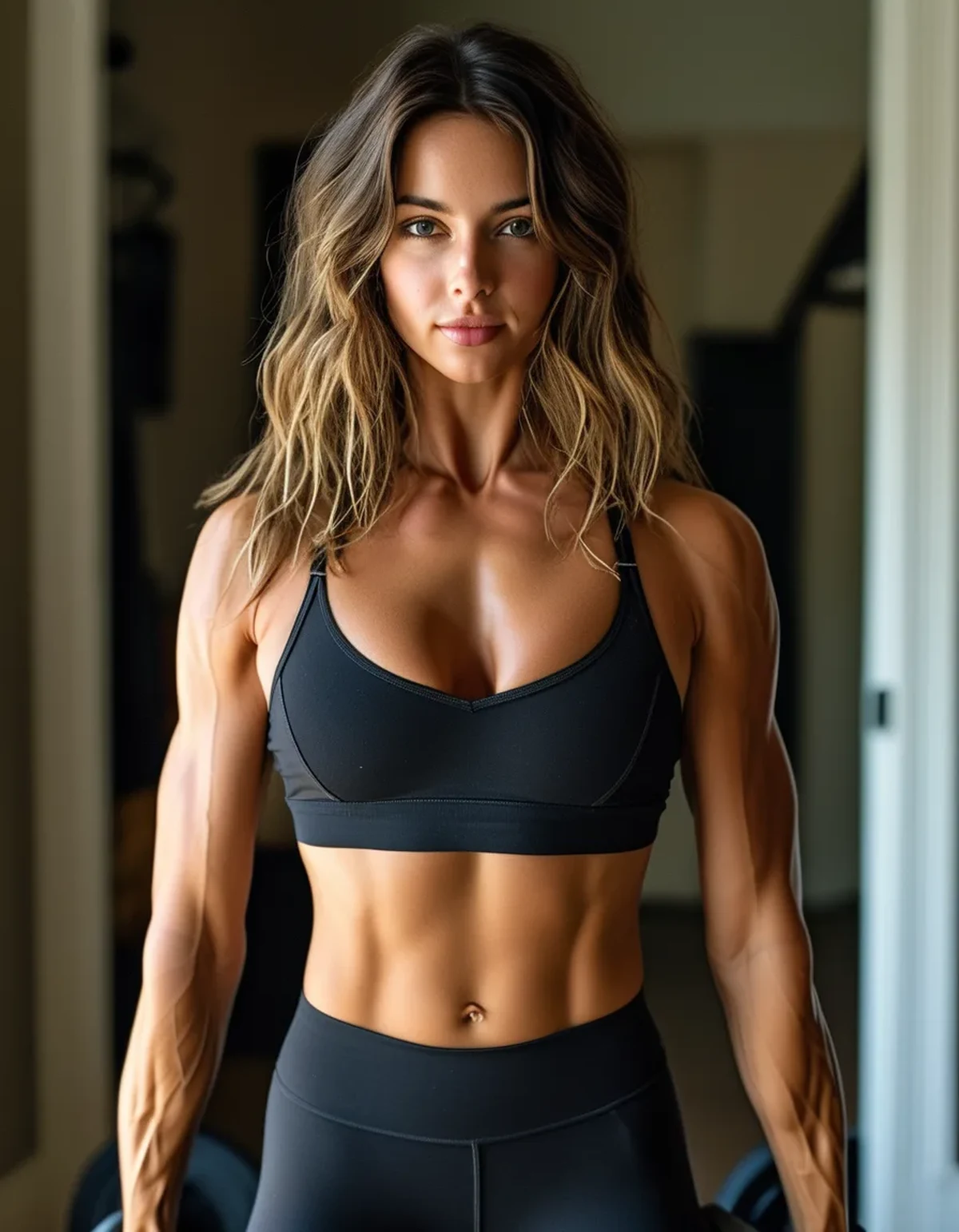
Base combination: high-rise full-length leggings with side pockets, a fitted long or cropped tank that passes the bend test, and flat trainers. This is the default for every session.
Cold-room version: the same base with a fitted long-sleeve underneath, or a light zip layer over the top that comes off after the warm-up.
Heavier-session version: the same base with your firmest, most compressive leggings and a supportive top - the pair you know does not move at all, saved for the days you are working near your limits.
Two sports bras minimum, in medium to high support. Lifting is lower impact than running but involves more overhead and lying positions, where fit matters more than impact rating.
One pair of shoes is genuinely enough to start. A flat, firm-soled trainer handles everything on a general gym floor. Do not buy lifting shoes in month one - they solve a problem you do not have yet.
Total realistic outlay: two pairs of leggings, three tops, two bras, one pair of shoes. That covers a full week and, notably, is close to what most people already own minus the shoes.
FAQ: Gym Floor Outfit Questions, Answered
Can I just lift barefoot or in socks?
Many gyms prohibit it for safety reasons - dropped plates are the concern. Where it is allowed, it is stable and effective. Grip socks are a good middle ground where permitted.
Do I need a lifting belt as a beginner?
No. Belts are useful at loads near your limit, which is not where you will be for the first several months. Learning to brace without one first is the better sequence.
Are shorts fine on the gym floor?
Completely, though longer inseams sit better on benches and pads than very short ones. Five to seven inch inseams are the common choice for exactly that reason.
Will I get too cold in a fitted top?
Between sets, possibly - which is what the removable layer is for. Working sets generate more heat than most people expect, so dress for the rest and strip for the set.
TL;DR:
- Floor work adds long static positions and deep hinges, so waistband security and top length become functional rather than stylistic.
- Flat shoes over cushioned running shoes is the single biggest upgrade - soft soles compress unevenly under load.
- Do the bend test before buying leggings, and prioritize side pockets over almost every other feature.
- Dress for the rests, not the sets: the weight floor is colder and you stand still more than you expect.
None of this requires replacing your class kit. Two pairs of well-fitting high-rise leggings, a few fitted tops, and one pair of flat shoes covers the entire transition. The shoes are the piece worth buying first, because they change how the lifts feel rather than just how the outfit works.
See It in Motion
Seen here: Super High Waist Embossed Yoga Leggings with Inner Pocket — shop it on bubblelime.com
Keep Reading
This article is for general informational and styling purposes only. Fit, sizing, and product availability may vary.